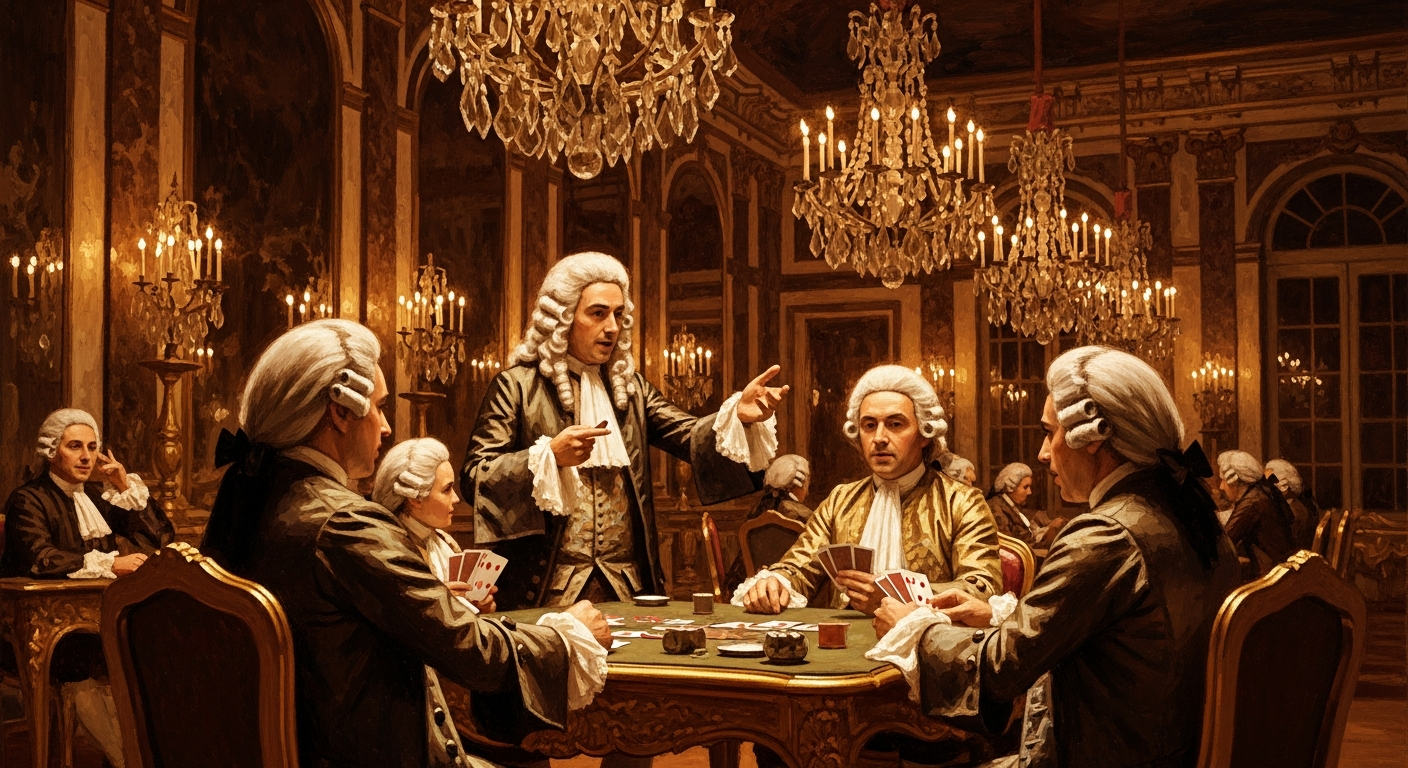
This casino gambling game originated in France in the late 17th century, where it was known as Pharaon (first recorded 1688).
The question of why the French renamed Bassetta “Pharaon” — pharaoh — has captivated historians. Historians have suggested that the name pharaon comes from Louis XIV’s royal gamblers, who chose the name from the motif that commonly adorned one of the French-made court cards. One of the standard cards in a French deck of that era depicted an Egyptian pharaoh, and the game took its name from this image — a fitting symbol for a game in which one player ruled over all others as an absolute sovereign over his subjects.
The timing was explosive. Louis XIV’s court at Versailles was the epicenter of European culture, and whatever happened there echoed across the continent. Pharaon spread from salon to salon like a rumor. Nobles played it behind closed doors at grand châteaux. Card parties ran through the night. Fortunes — land, titles, heirlooms — were staked on the turn of a card.
It was during the reign of King Louis XIV that Faro was first mentioned. It first appeared in Southwestern France under the name “Pharaon” only a couple of years after basset had been outlawed.
King Louis XIV, watching the ruin it was causing among his nobility, made a decisive move. Basset was a polite game, but King Louis XIV outlawed it back in 1691. Pharaon followed basset into illegality not long after — but banning a game that aristocrats loved was easier declared than enforced. The game went underground, into private rooms, carriages, and the back parlors of Paris, where it continued to thrive exactly as before.