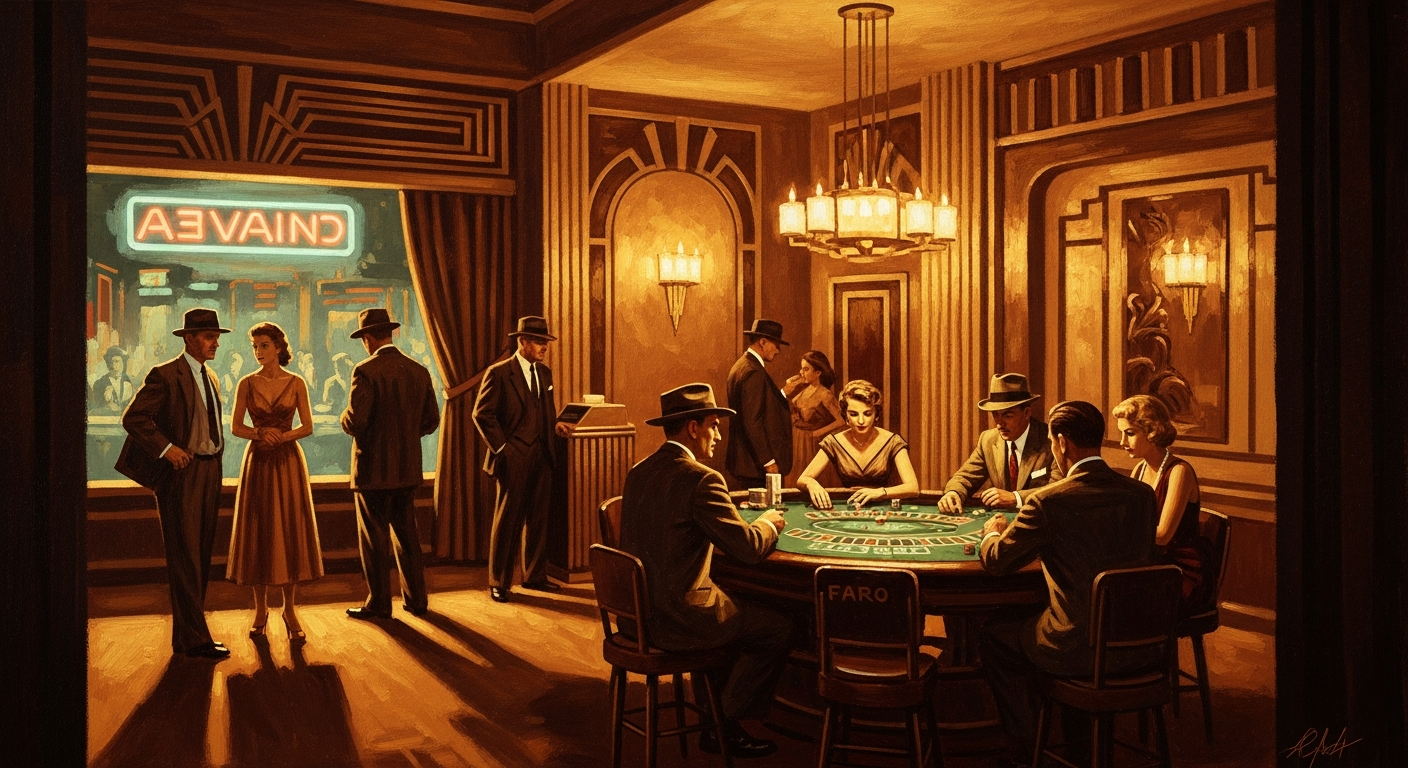
Nevada’s legalization of gambling in 1931 gave faro one last breath. A handful of old-timers who still knew the game set up tables in Reno and Las Vegas, and for a generation, you could still sit down to a genuine faro bank in the Silver State.
By the 1950s, it had gone out of fashion once again, as more profitable house games such as craps and roulette were promoted by the casinos. By this time, only five active Faro banks were known to exist in Nevada.
The economics were simple and brutal: with such low profit margins, casinos abandoned it. Modern casinos are optimized for yield. Every square foot of floor must generate a certain return. Faro, played honestly, simply didn’t generate enough. And casinos could no longer get away with the gaffed boxes that had sustained the game through the frontier era.
The last faro “bank” was closed in 1975 in Ely, Nevada, although there was a short revival at Reno in 1980–85.
Jim Finley, who dealt the game in Nevada for over three decades, in 2000 mourned the loss of the West’s favorite card game, stating, “The casinos today aren’t in gambling. They don’t want a game you can win.”
That quote is faro’s epitaph. A casino that lets you win is not a casino — it’s a charity. Faro was killed not by its failure but by its fairness.