Virginia City, Nevada. 1861. A silver rush town so wild and so wealthy that miners paved the streets with low-grade ore because it wasn’t even worth hauling away.
Into this place came a faro table.
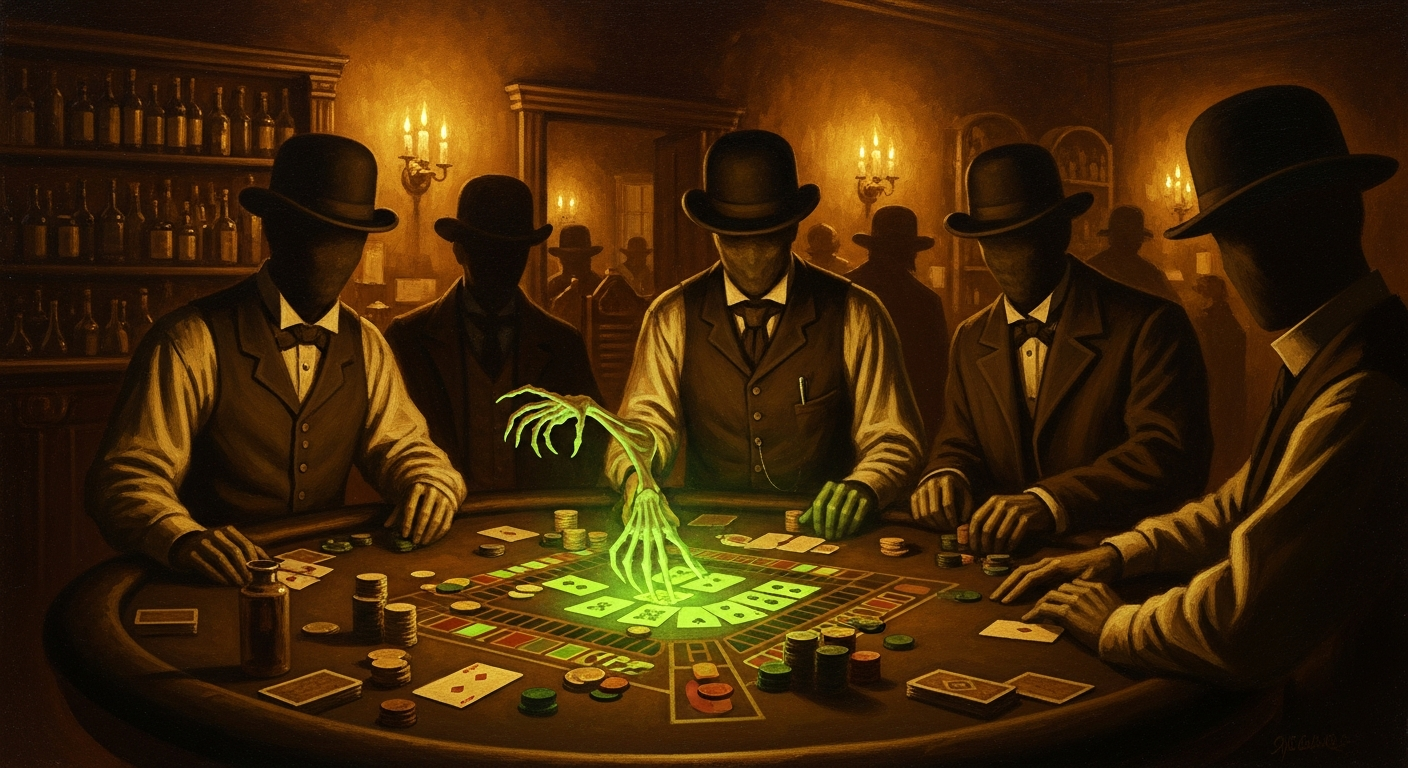
Originally a Faro Bank Table brought to Virginia City in the early 1860s. Its first owner was a man known only as Black Jake — a greedy, opportunistic man who recognized that the silver miners flooding into the Comstock Lode were going to spend their money somewhere, and he intended to be somewhere. One eager gambler was a man called “Black Jake.” He had a reputation in Virginia City of being very greedy. He bought a table and with the faro craze in full swing, miners lost a lot of money.
For a while, it worked beautifully. The punters came, placed their bets on the layout, and lost their money in the elegant, fast way that only faro could produce. Black Jake watched the chips pile up. He must have felt invincible.
Then one evening, it all reversed.
The owner, supposed to be one “Black Jake,” lost $70,000 in one evening and shot himself.
Seventy thousand dollars. In one night. At his own table.
The table passed to a second owner. History didn’t preserve his name, which in itself is a kind of mercy. He ran a single night of play. The second owner, whose name is lost in history, ran the table for one night’s play. He was unable to pay off his losses. One report has it that he committed suicide and another report has it that he was saved the trouble.
The ambiguity of that last phrase — saved the trouble — tells you something about the atmosphere of Virginia City in those years. A man who couldn’t pay his gambling debts faced consequences that weren’t always left to himself to carry out.
Nobody wanted to deal on it. Just because of the losses that incurred.
The table was locked away. Hidden in a storeroom. For years, no one would touch it. Word spread through Virginia City and beyond: the table was cursed. Any man who tried to bank a faro game from behind it would be destroyed.
Time passed. People forgot. Memory is short, especially in a town that reinvented itself with every new strike.
In the 1890s, a successful businessman named Charles Fosgard decided he wanted to invest in gambling. He found an old, well-worn gaming table tucked in the back of the Delta Saloon and bought it cheap. He didn’t know its history. Or perhaps he didn’t believe in curses.
He converted the old faro layout into a blackjack table. A fresh start, he thought. New game, new luck.
One stormy night, a destitute miner came into the saloon possessing nothing but a gold ring to bet with, having lost all his money in another bar and hoping to win big. He wagered his ring against a five-dollar piece and won. He let it ride. He won again. And again.
A drunken miner wandered in and had a wild streak of gambling luck, winning $86,000, a team of horses, and an interest in a gold mine. Everything the owner of the table had in the world.
Fosgard watched everything he owned pass across the table and into the hands of a drunk miner who had walked in with a gold ring. His wealth was demolished and, in a fit of despair, he drew his revolver and committed suicide right at the table in full view of onlookers.
Three owners. Three dead men. One table.
The suicides were all casino owners. They were operating the faro game, not playing it. This is the twist that makes the story something more than just a gambling horror story. These weren’t desperate punters who had lost their shirts. These were the house — the men who were supposed to have all the advantages — destroyed by the mathematics of the one card game in history that was genuinely close to fair.
In keeping with the cursed history of the Suicide Table, its long-time home in Virginia City, the Delta Saloon, blew up on March 11, 2019. The Suicide Table emerged remarkably unscathed.
Three men dead. A building blown apart. The table: fine.
The Historic Delta Saloon has welcomed miners, gamblers, and adventurers for over 150 years. Mark Twain himself frequented the Delta, sharing drinks and stories that helped shape his early writings.
Today the Suicide Table sits in the Bonanza Saloon down the street from where the Delta once stood, encased in protective plexiglass. Whether the plexiglass is meant to protect the table from curious visitors, or to protect curious visitors from the table, is a question the staff leaves diplomatically unanswered.