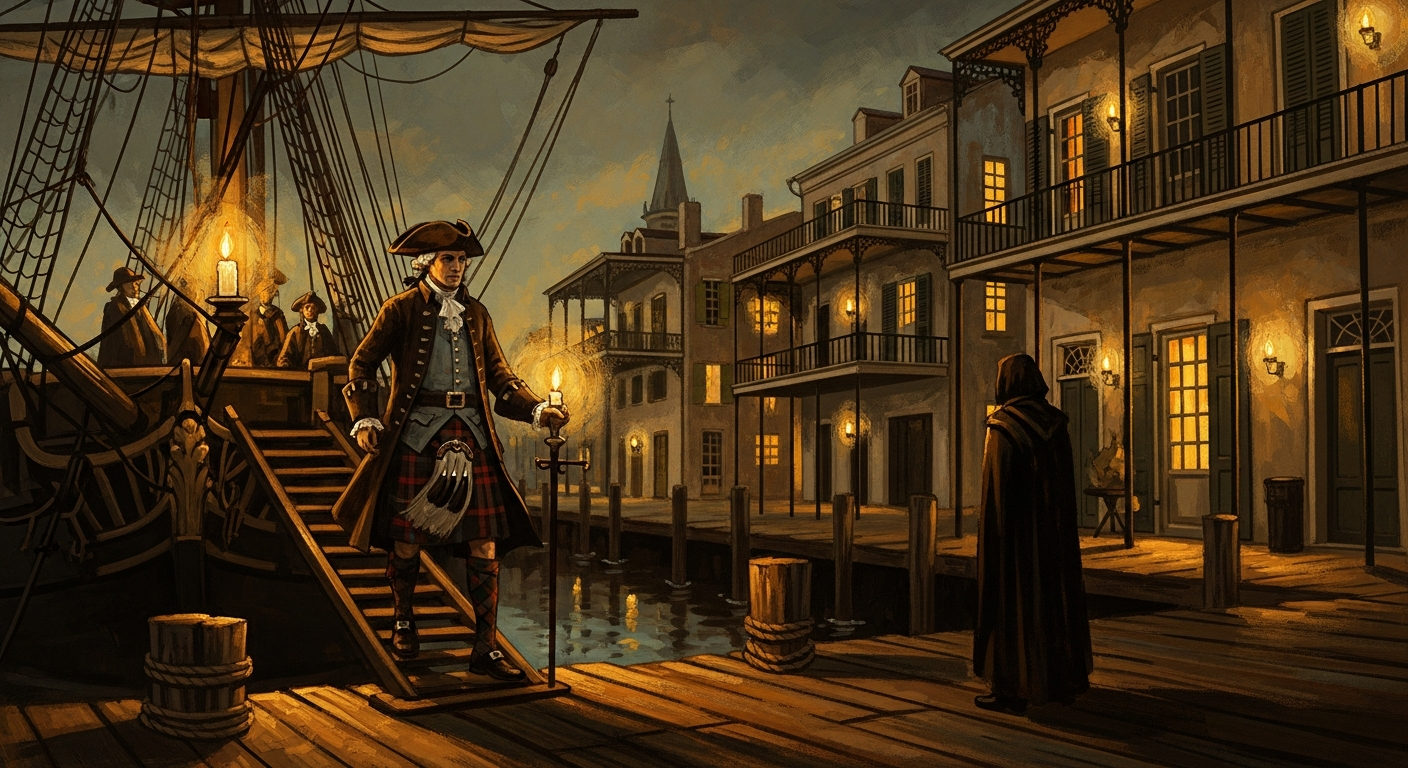
The man who carried faro across the Atlantic was one of the more improbable characters in financial history. Scottish expatriate John Law (1671 to 1729) introduced an early version of the game in the Americas around 1717 in what was to become the city of New Orleans.
Law was simultaneously a gambling addict, a financial genius, and a fugitive. The son of a goldsmith, Law, in his youth, participated in a duel in England; because his victim was the son of a prominent politician, he was forced to flee England. He fled to the continent, where he drifted through the gambling dens of Europe, studying money, credit, and the mechanics of probability with the same attention he gave to the cards.
He eventually made it back to France, where he parlayed his ideas and his connections into something extraordinary. Law went on to form the Royal Bank of France and print the first government-backed paper currency. In time, Law established the North American Indian Trading Company. For 25 years, this company held a monopoly on all French overseas trade.
But Law could not escape gambling. Louis XIV expelled Law from France in 1714 for accruing heavy gambling debts on behalf of the King’s nephew, Philippe II, the Duke of Orleans.
When Law arrived in the nascent colony that would become New Orleans, he brought faro with him — and it found the perfect city. New Orleans was a port open to the world: French, Spanish, African, Caribbean, British. It was a place where money flowed freely and cultural barriers dissolved under the Louisiana sun. Faro took root there like nothing else could. Following the Louisiana Purchase in 1803, Law endorsed the game of faro, which spread up the Mississippi River on riverboats, where it became a favorite among professional gamblers and players alike.