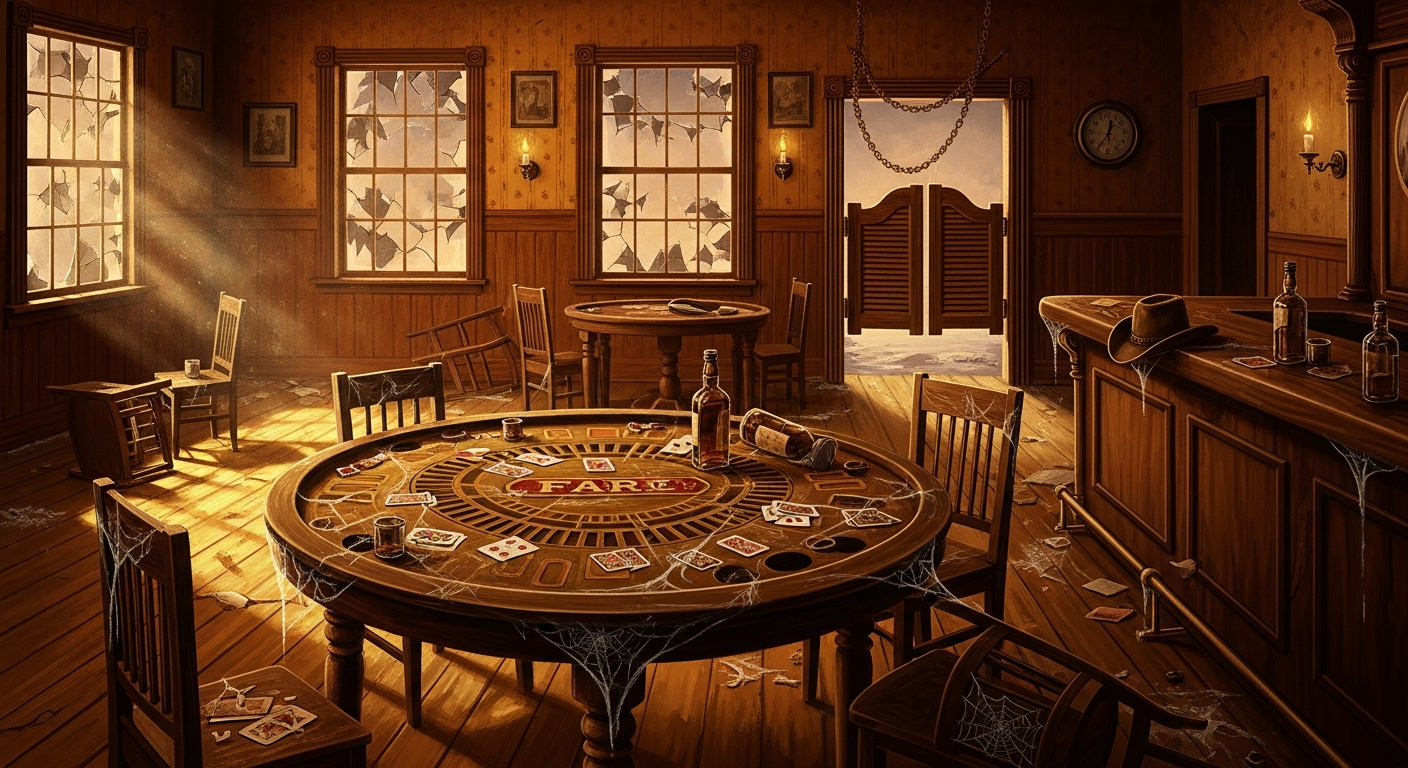
By 1900, the pressures were mounting from every direction. The exciting age of western gambling had all but folded with the closing of the frontier. The rise of anti-saloon and woman suffrage reform was winning. State after state passed legislation outlawing gambling.
The temperance movement and the anti-gambling crusade were deeply intertwined, and faro was their primary target. Its association with saloons, prostitution, violence, and ruined families made it the perfect villain. Reform politicians condemned it by name. Newspaper exposés documented the crooked boxes and the broken men who left faro tables penniless.
Poker was also rising, and it offered something faro never could: skill. Poker’s popularity grew because it was harder to rig and more engaging strategically. A man who understood cards could beat poker; faro offered only the cold mathematics of chance — and a crooked dealer. As the frontier closed and American society urbanized and formalized, poker’s social dimension — the bluff, the read, the psychology — proved more durable than faro’s pure speed.
Due to the extremely low odds for the house, legitimate Faro was virtually gone by 1925. The game that had consumed an entire civilization was dying.