The History of Faro
From the Courts of Versailles to the Last Table in Nevada — the complete story of the card game that consumed empires, bankrolled the frontier, and inspired the greatest literature ever written.
Dostoevsky lost his fortune to it. Casanova financed his adventures with it. Wyatt Earp and Doc Holliday built their livelihoods dealing it. In 1882, Americans wagered more money on faro than on every other form of gambling combined.
Chapters
14 chapters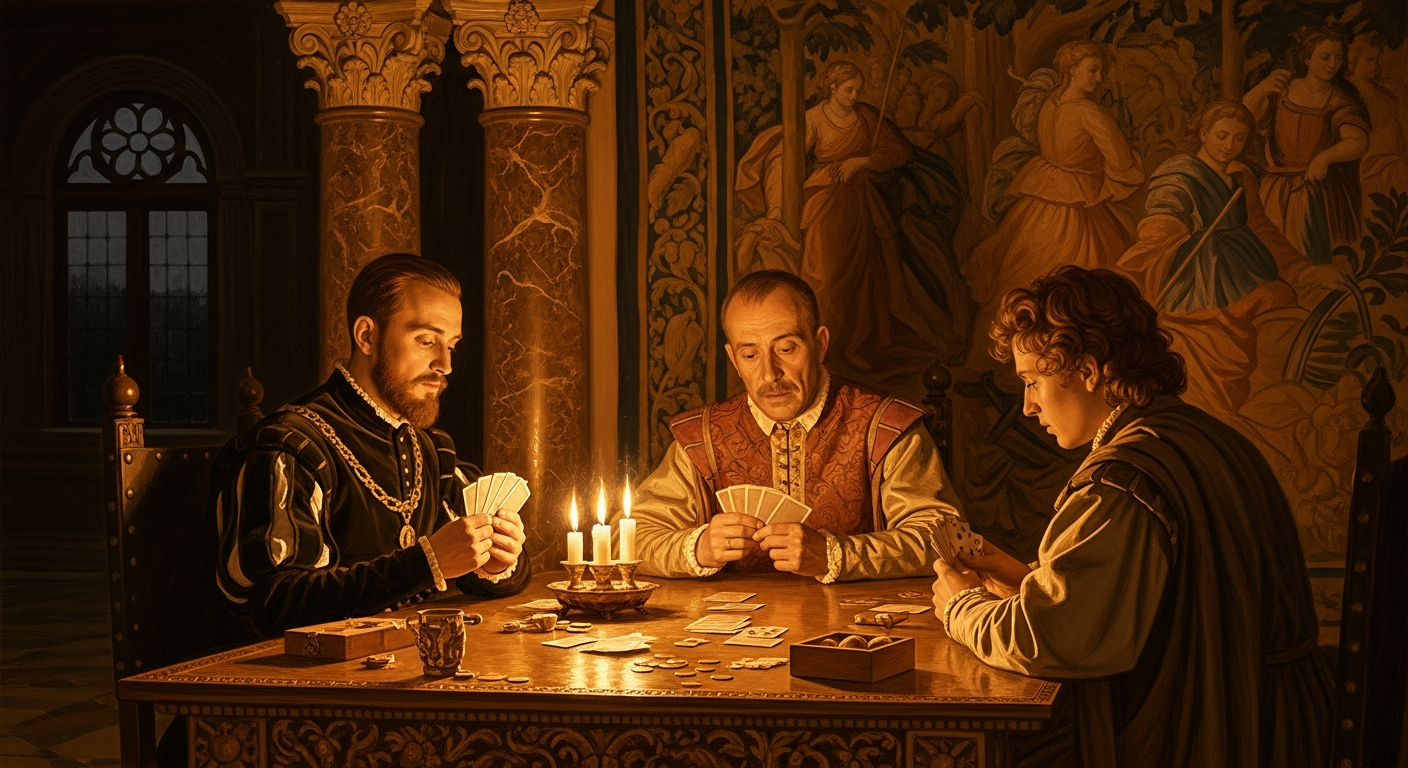
Before Faro — The World of Bassetta (15th Century – 1688)
Every game has a parent, and Faro’s was a shadowy Italian game called Bassetta — or Bassette, or Barbacole, or Hocca, depending on which alley you were playing it in. Faro is a derivative of the game Bassetta, which was brought to Paris from Italy in the early 17th century. Its origins can be traced back to as early as the 15th century.
Read More →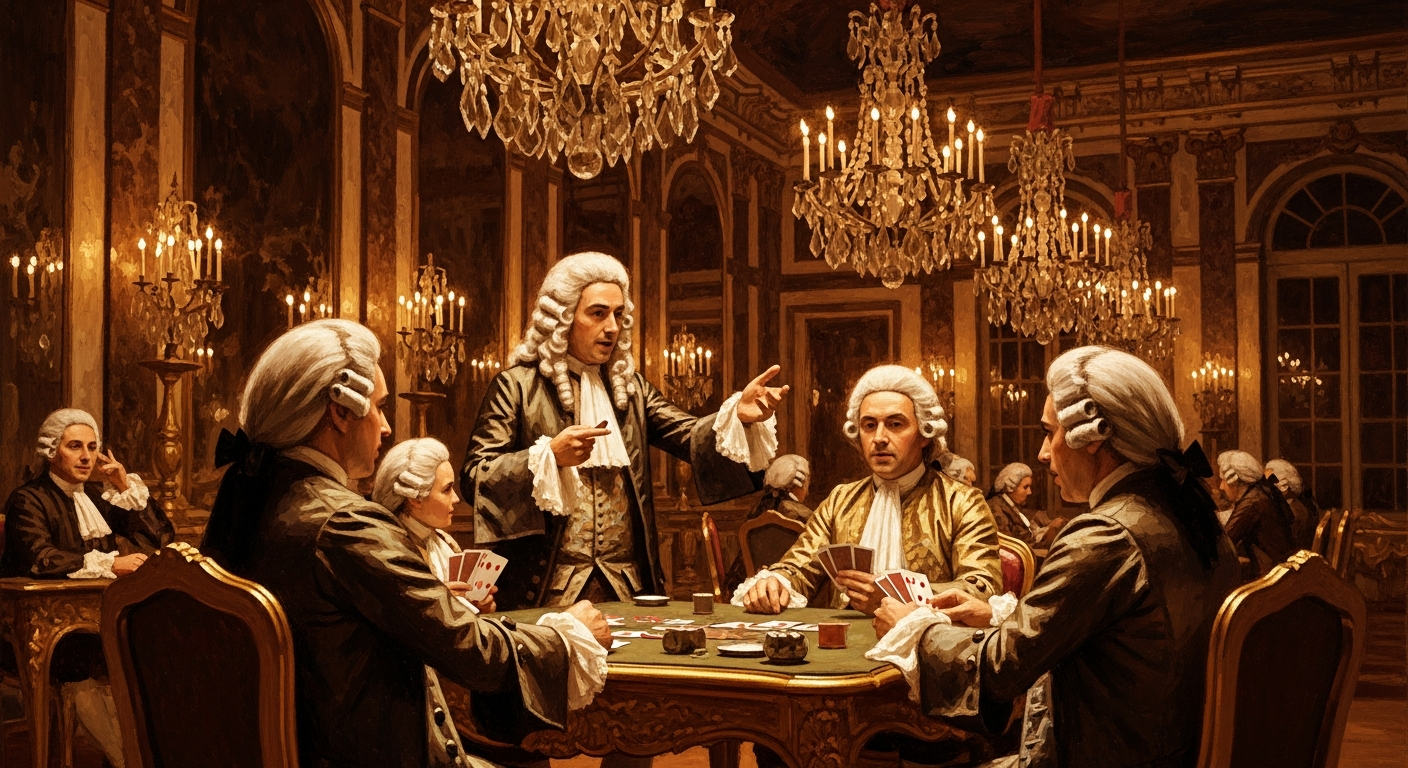
Pharaon Is Born — Louis XIV’s Court (1688 – 1710)
This casino gambling game originated in France in the late 17th century, where it was known as Pharaon (first recorded 1688).
Read More →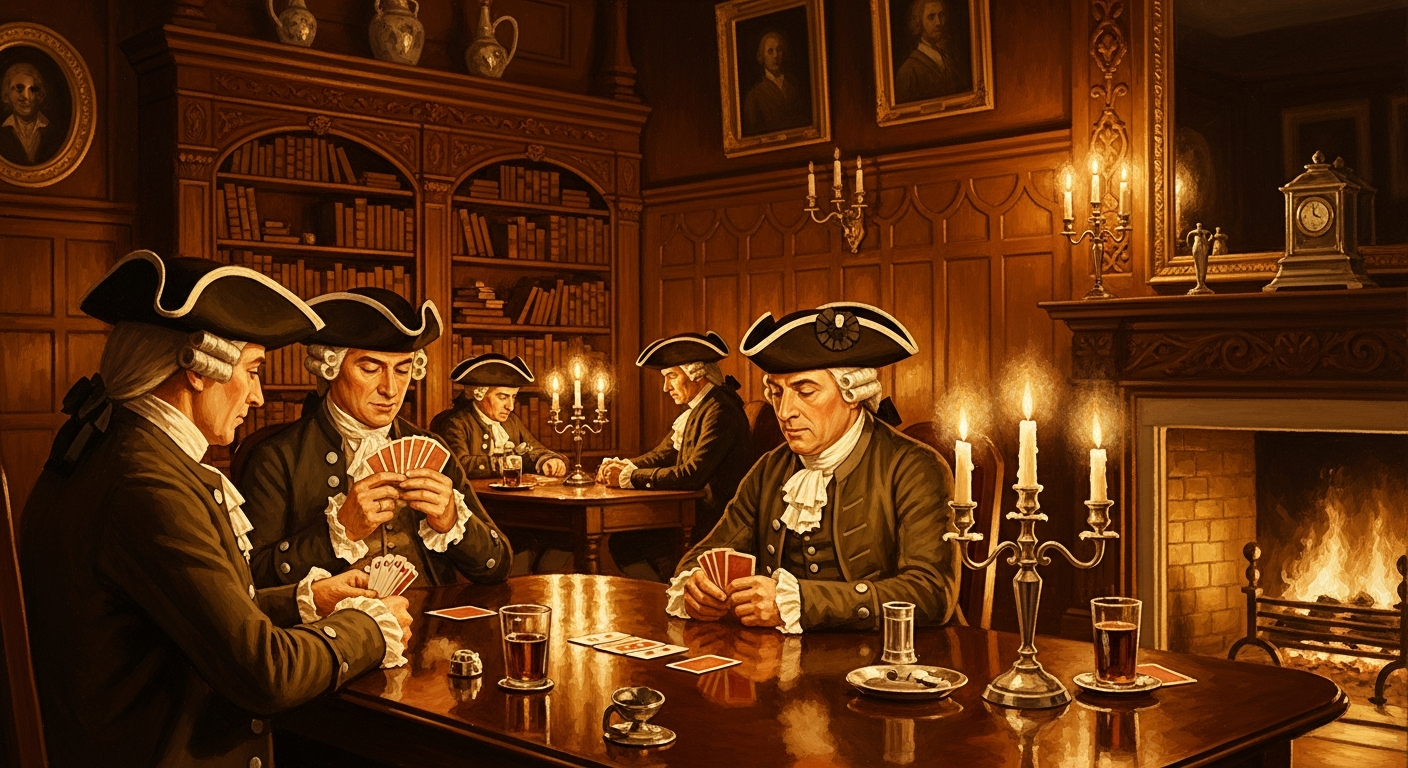
The English Embrace It — Pharo in Georgian Britain (1710 – 1780)
When Pharaon jumped the English Channel, it became Pharo — and found an even more enthusiastic audience. After the French ban, pharaoh and basset continued to be widely played in England during the 18th century, where it was known as pharo, an English alternate spelling of pharaoh. The game was easy to learn, quick, and when played honestly, the odds for a player were considered by some to be the best of all gambling games, as Gilly Williams records in a letter to George Selwyn in 1752.
Read More →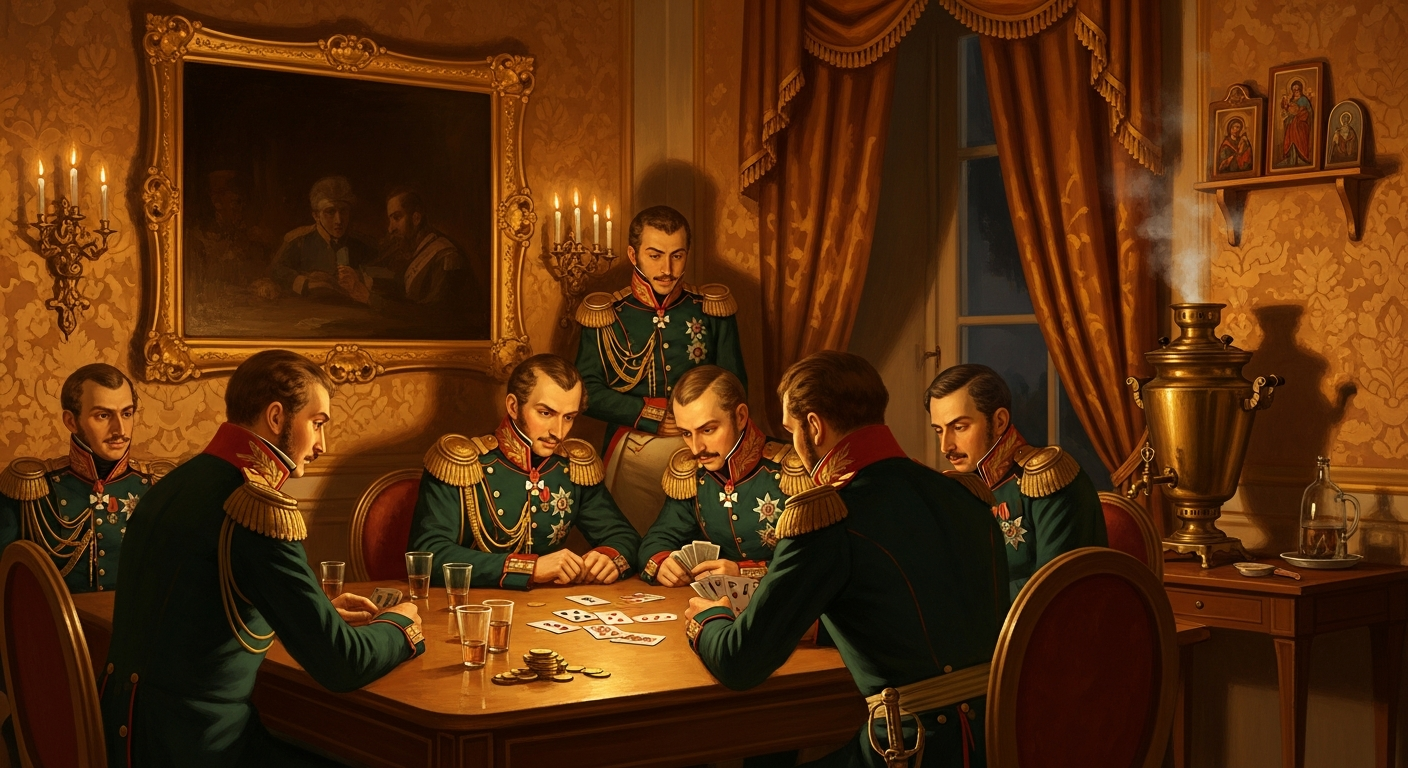
The Russians Are Ruined — Pharaon at the Czar’s Court (1780 – 1840)
No country took faro to its dark extremes like Russia. The game — known as Pharaon or Shtoss in its Russian variants — became synonymous with aristocratic destruction. Gambling in Russia was already widespread as early as the 17th century. Card games were divided into two types: games of strategy and games of chance. The goal of games of chance was winning money. The higher the stakes, the higher the risk and hence the higher players’ excitement. Emotional intensity would captivate the player more and more – causing many to lose everything in one night.
Read More →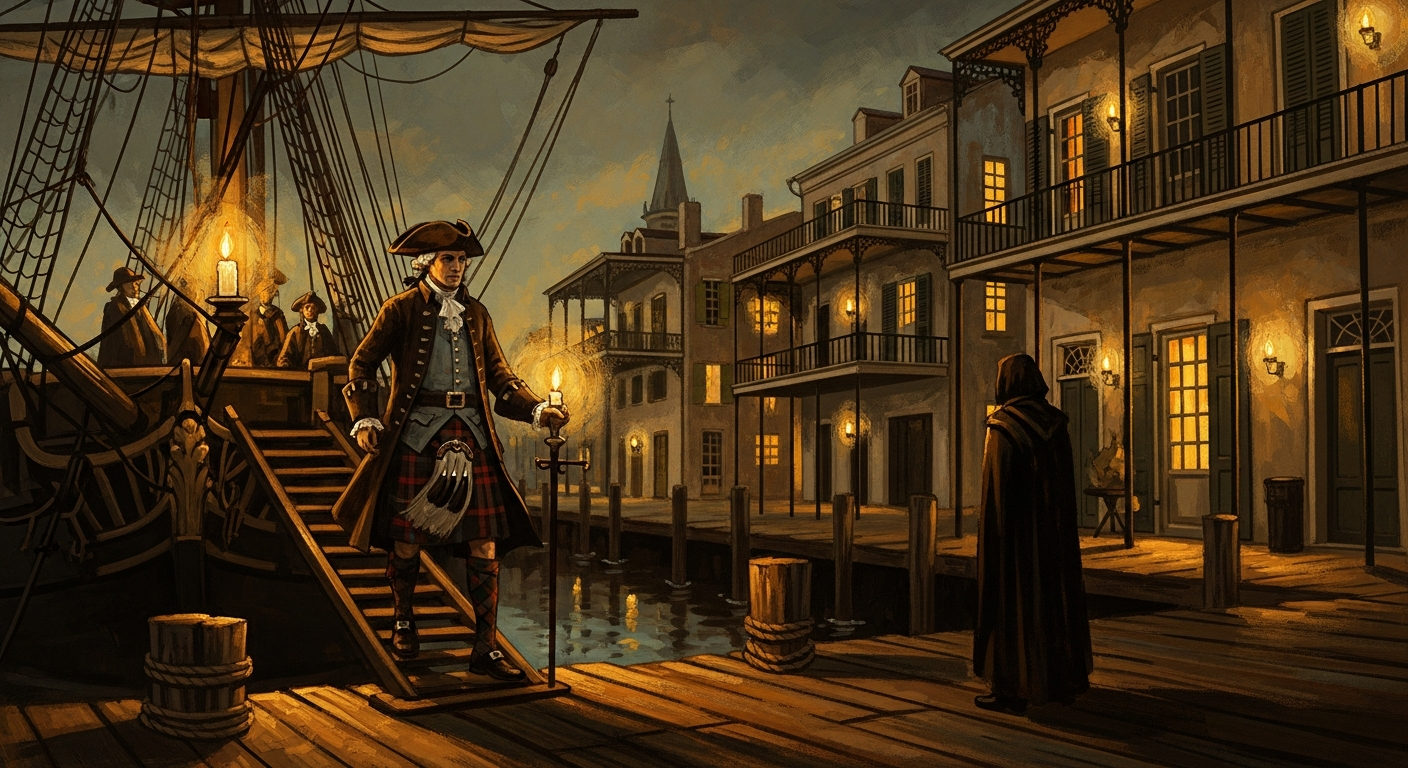
The Scottish Outlaw Who Brought Faro to America (1717)
The man who carried faro across the Atlantic was one of the more improbable characters in financial history. Scottish expatriate John Law (1671 to 1729) introduced an early version of the game in the Americas around 1717 in what was to become the city of New Orleans.
Read More →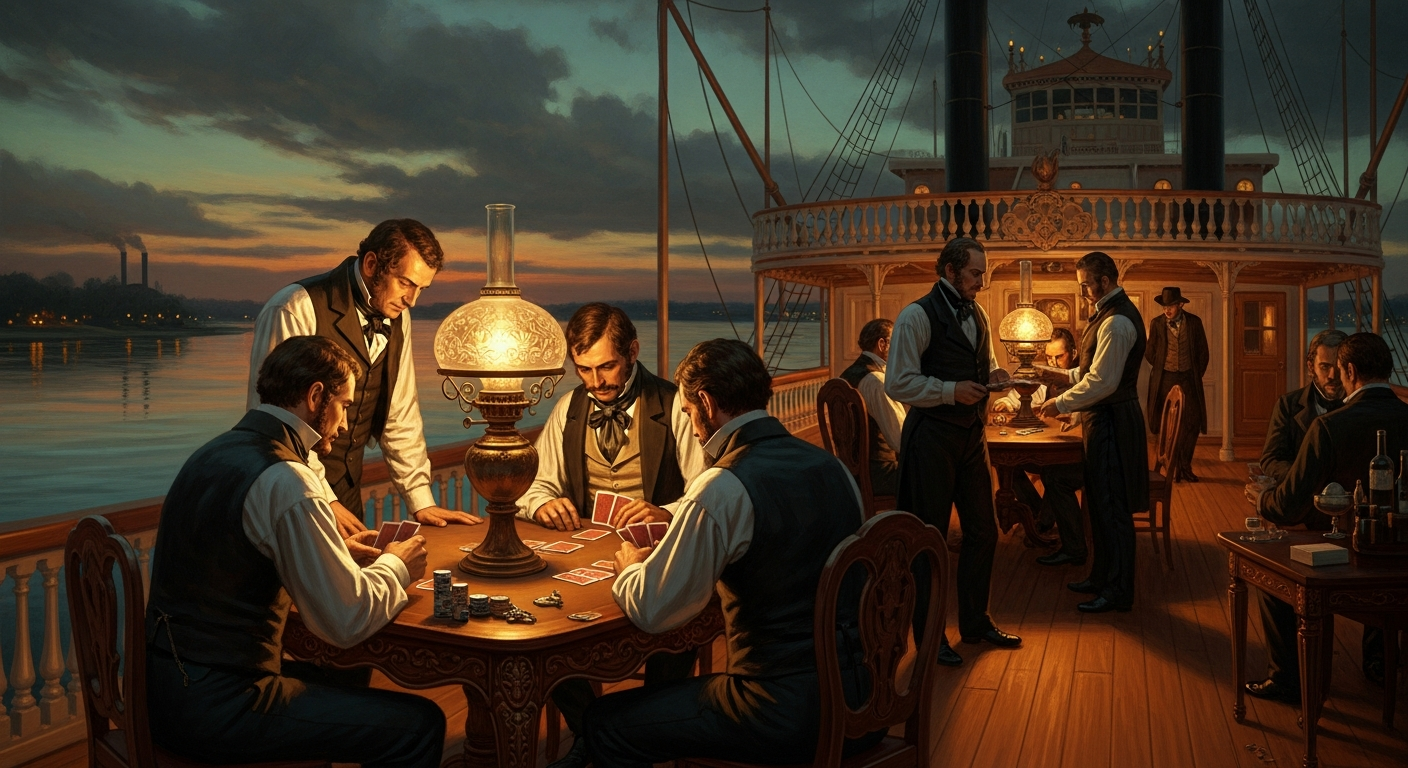
The Mississippi River — Faro’s Highway (1820 – 1850)
The steamboat was to faro what the internet is to modern commerce: a distribution network of unparalleled reach. By the 1830s, the Mississippi and its tributaries carried thousands of passengers between New Orleans, Natchez, Memphis, St. Louis, and Cincinnati — and where passengers went, professional gamblers followed.
Read More →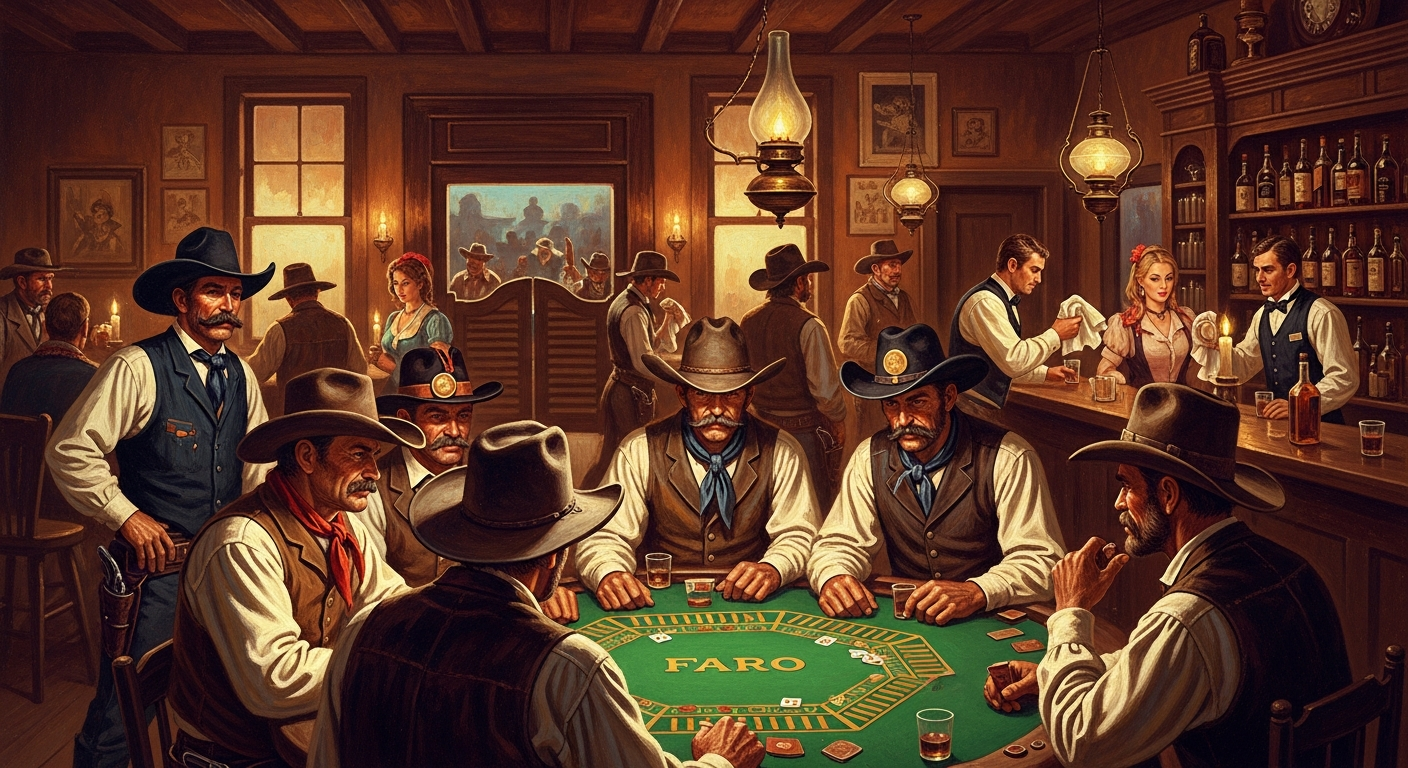
Bucking the Tiger — The Wild West Era (1849 – 1900)
The California Gold Rush of 1849 did for faro what oxygen does for fire. Faro originated in France in the late 17th century. First known as Pharaon, it became extremely popular in Europe in the 18th century. With its name shortened to Pharo or Faro, it soon spread to America and became the favored game during the California Gold Rush. The game then spread into gambling halls all over the American Frontier, with such illustrious names as Doc Holliday and Wyatt Earp often performing the task of a Faro Dealer.
Read More →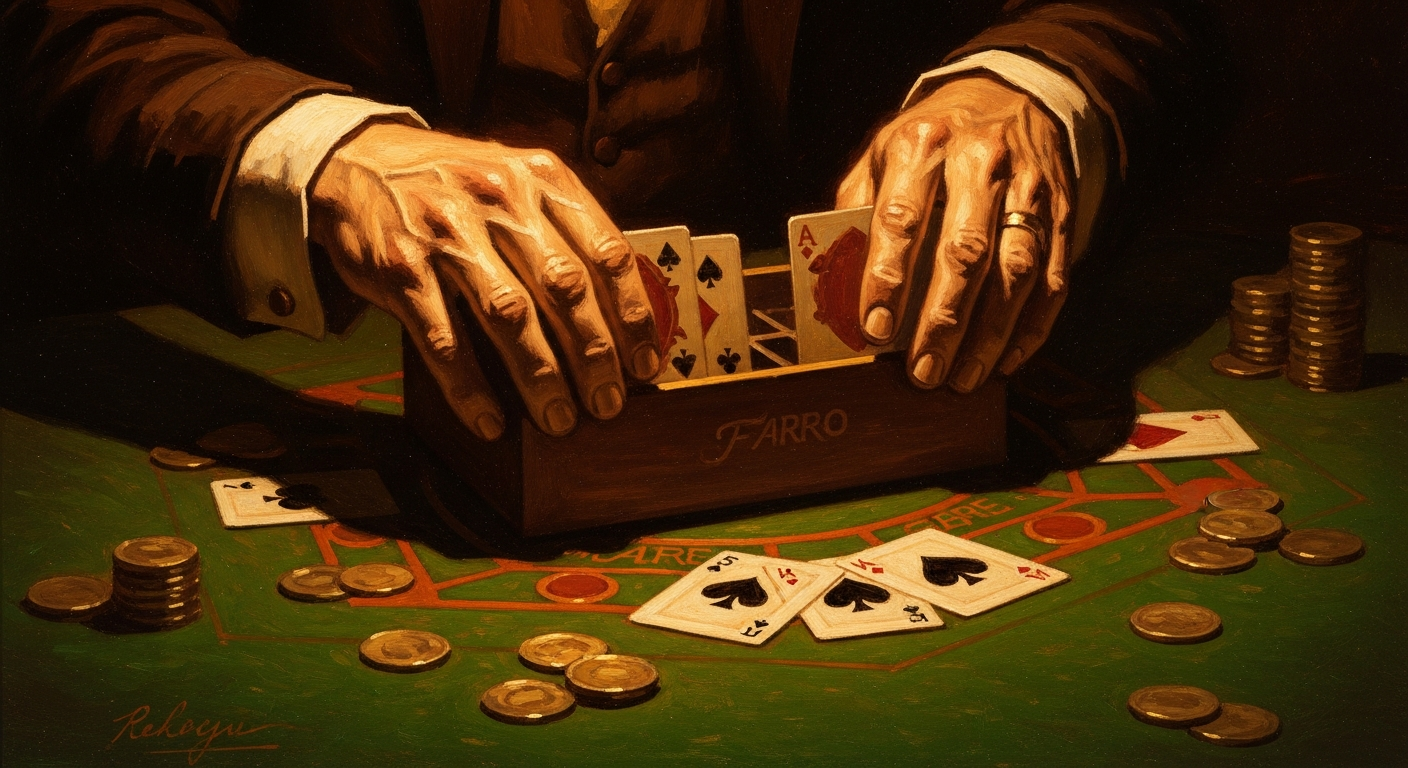
The Art of the Cheat — Inside the Crooked Box
The reason faro’s fortunes ultimately collapsed was the same reason it was so beloved: it was almost fair. When these rules are reviewed, it becomes apparent that there is no significant edge for the dealer, or “house,” which resulted in cheating by the “banker” becoming commonplace.
Read More →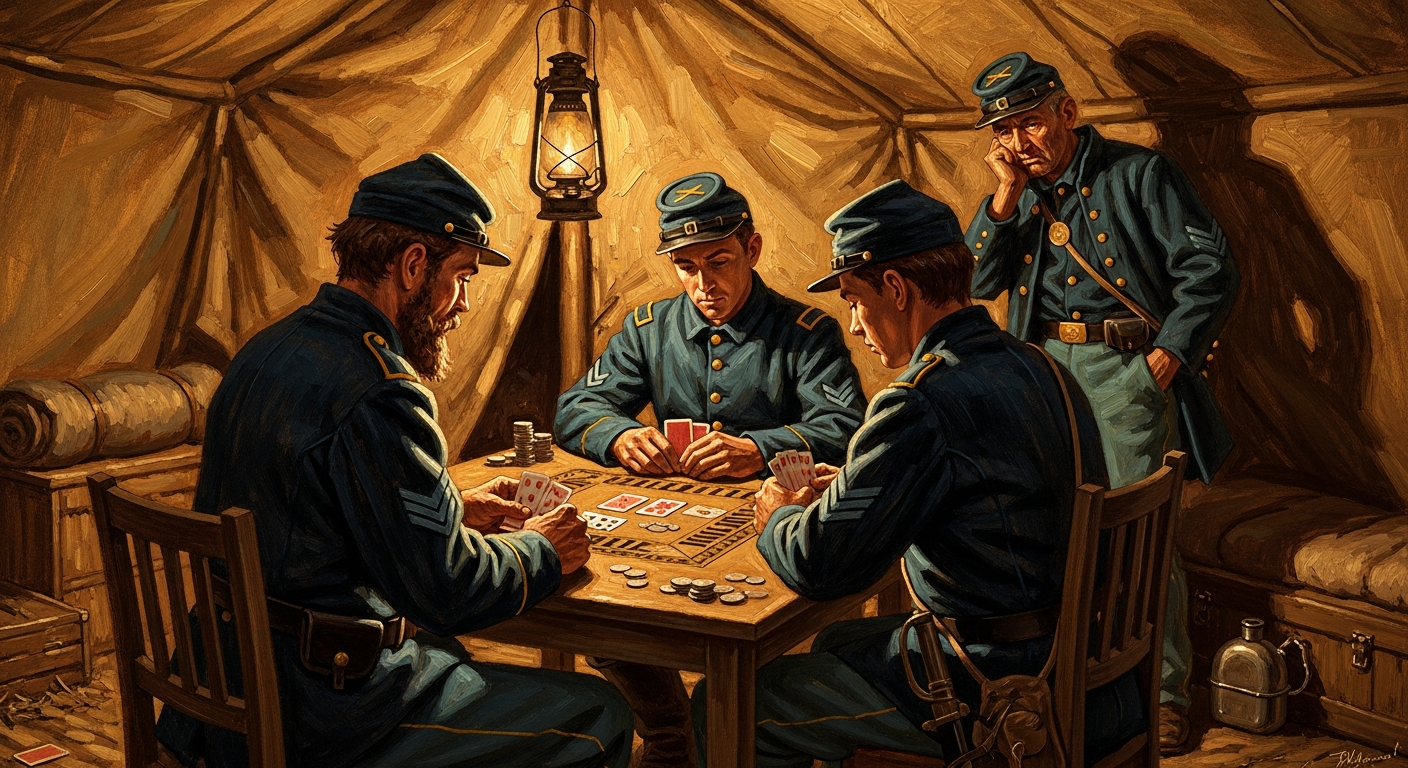
The Civil War and the Height of American Faro (1861 – 1865)
The American Civil War created a perfect storm for gambling. Hundreds of thousands of young men were idle between battles, flush with pay, surrounded by uncertainty and boredom, and death was close enough to make any man feel invincible at the card table. Faro exploded.
Read More →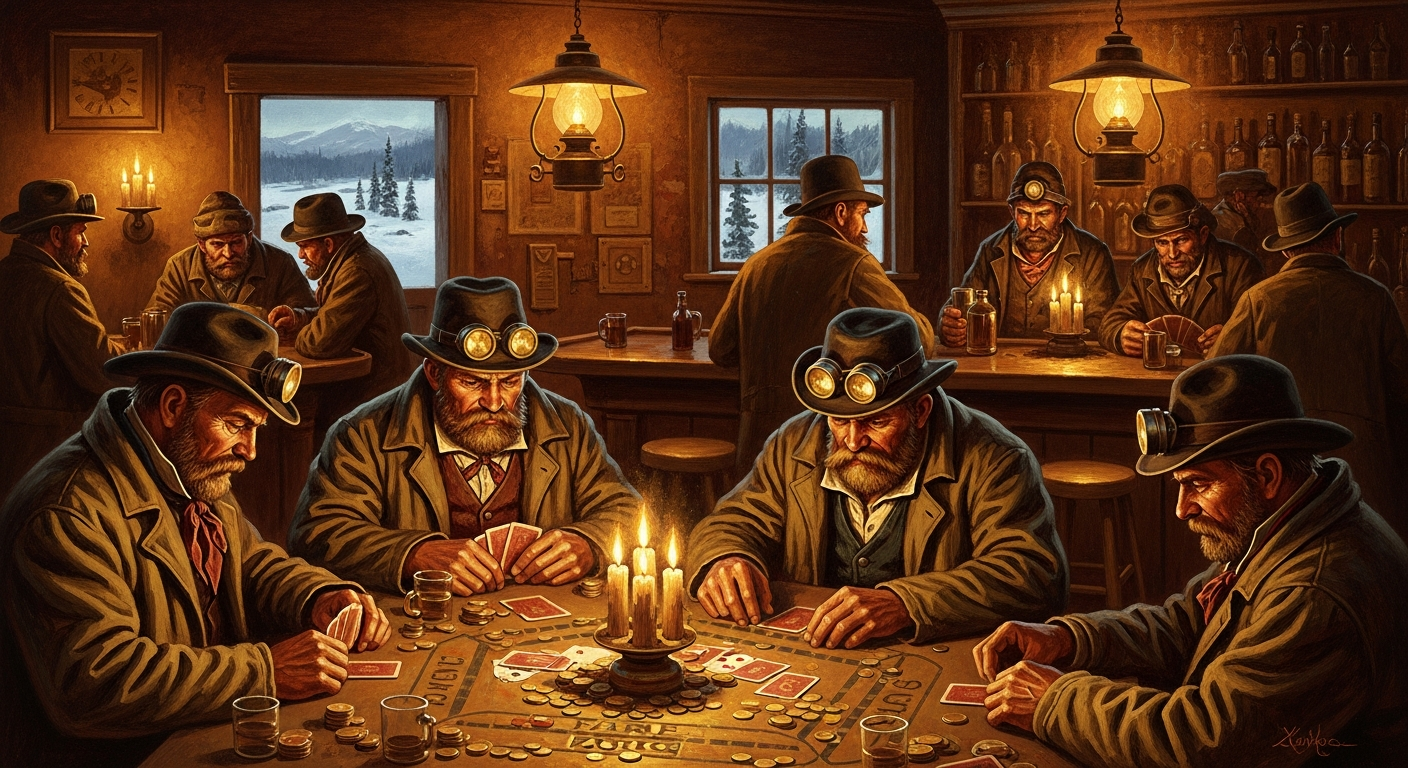
The Klondike — Faro’s Last Frontier (1896 – 1910)
The gold discoveries in Canada’s Yukon Territory in the 1890s triggered one last great faro migration. Every gambler who had worked the western saloons knew that where miners went, easy money followed. The last great rush for a new mining district was on, both for the miners and those with the purpose of mining the miners. Some of the most colorful professional gamblers made it to the assortment of saloons, brothels and gambling halls newly developed.
Read More →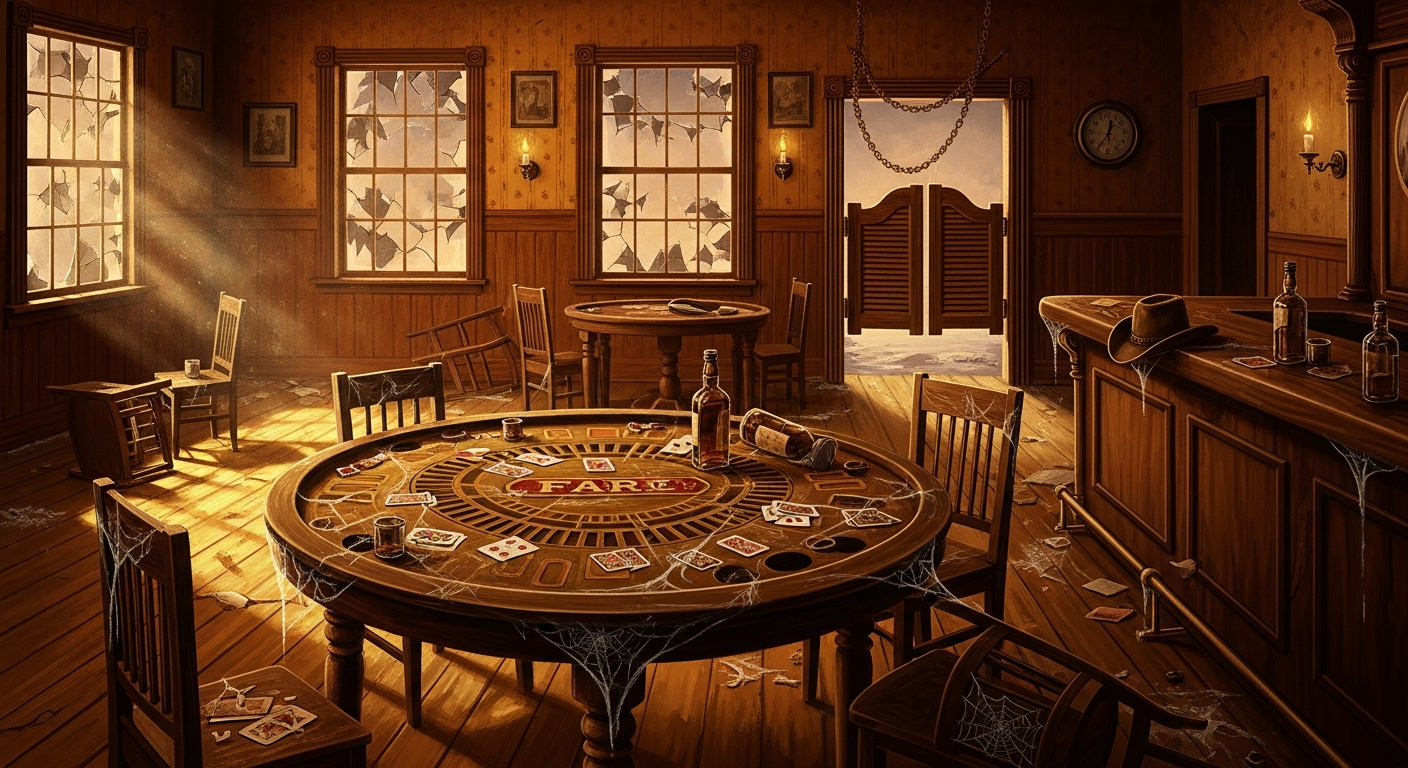
The Long Decline — Prohibition, Poker, and the Puritan Turn (1900 – 1930)
By 1900, the pressures were mounting from every direction. The exciting age of western gambling had all but folded with the closing of the frontier. The rise of anti-saloon and woman suffrage reform was winning. State after state passed legislation outlawing gambling.
Read More →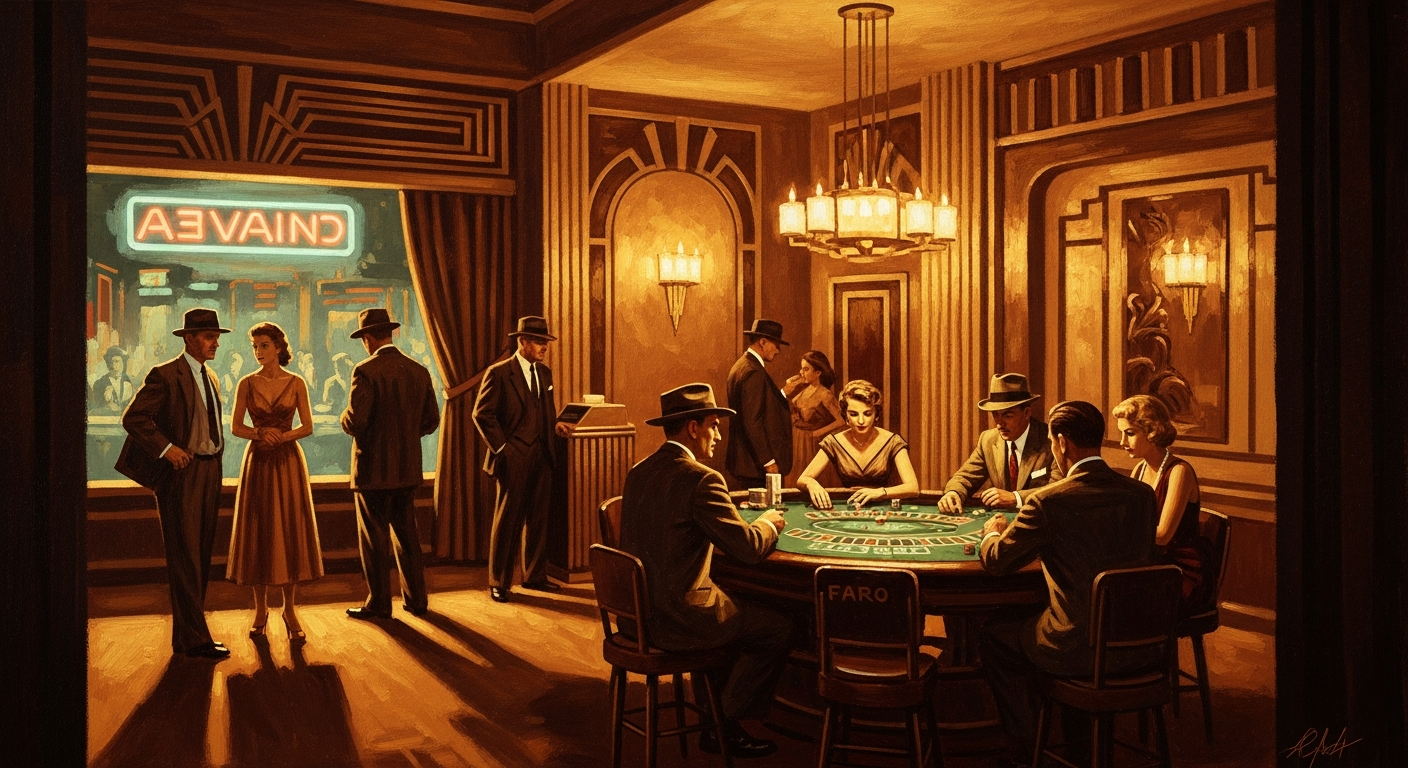
Nevada’s Revival — The Last Tables (1931 – 1985)
Nevada’s legalization of gambling in 1931 gave faro one last breath. A handful of old-timers who still knew the game set up tables in Reno and Las Vegas, and for a generation, you could still sit down to a genuine faro bank in the Silver State.
Read More →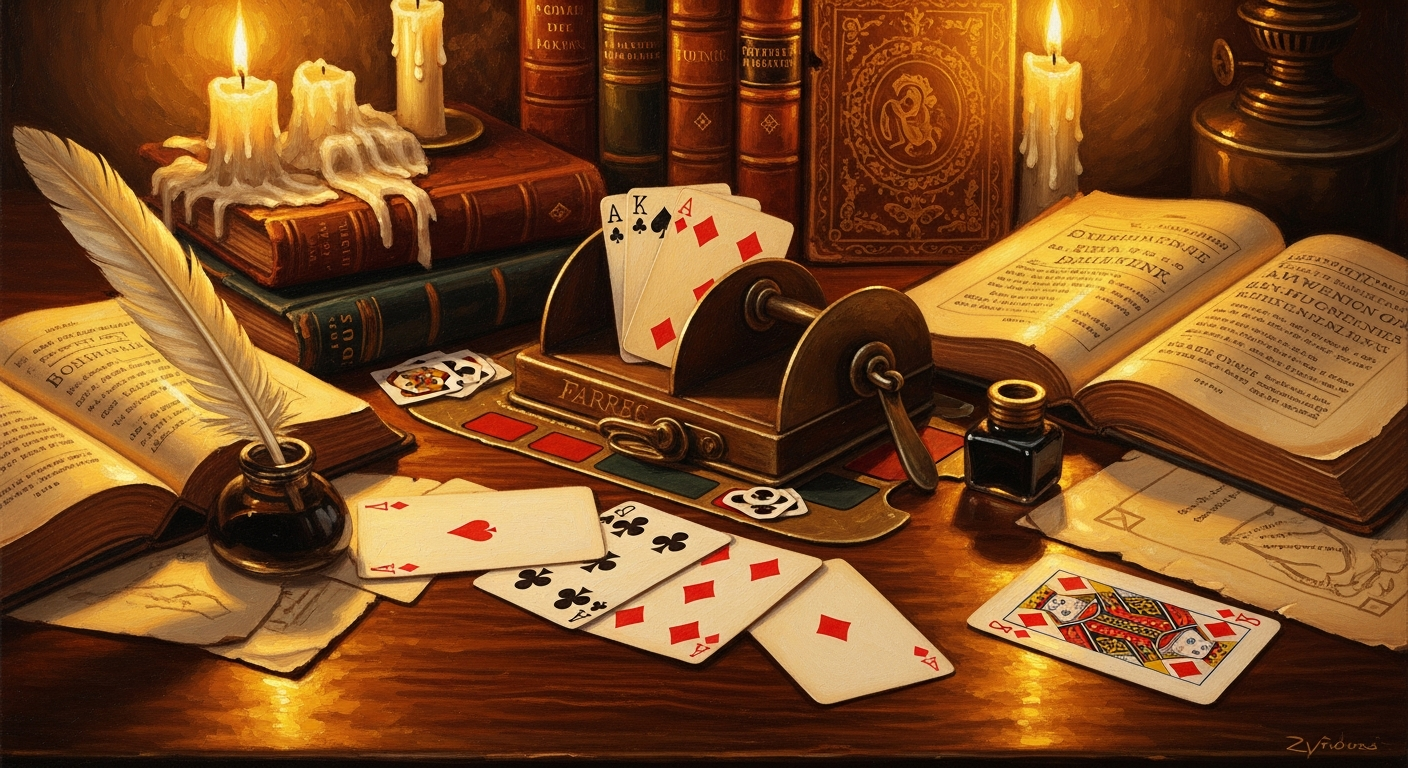
The Ghost in the Machine — Faro’s Hidden Legacy
The game is gone from every casino floor on earth. But its fingerprints are everywhere.
Read More →Why Faro Deserves to Return
Faro died because the house couldn’t profit from it honestly, and the public eventually stopped tolerating the dishonesty. But those circumstances no longer apply. In a digital environment — where the odds can be set transparently, where every player can verify every outcome, and where no dealing box can be gaffed — faro is finally free.
Read More →Stories of Faro
Eight standalone dispatches from the most dramatic card game in history.
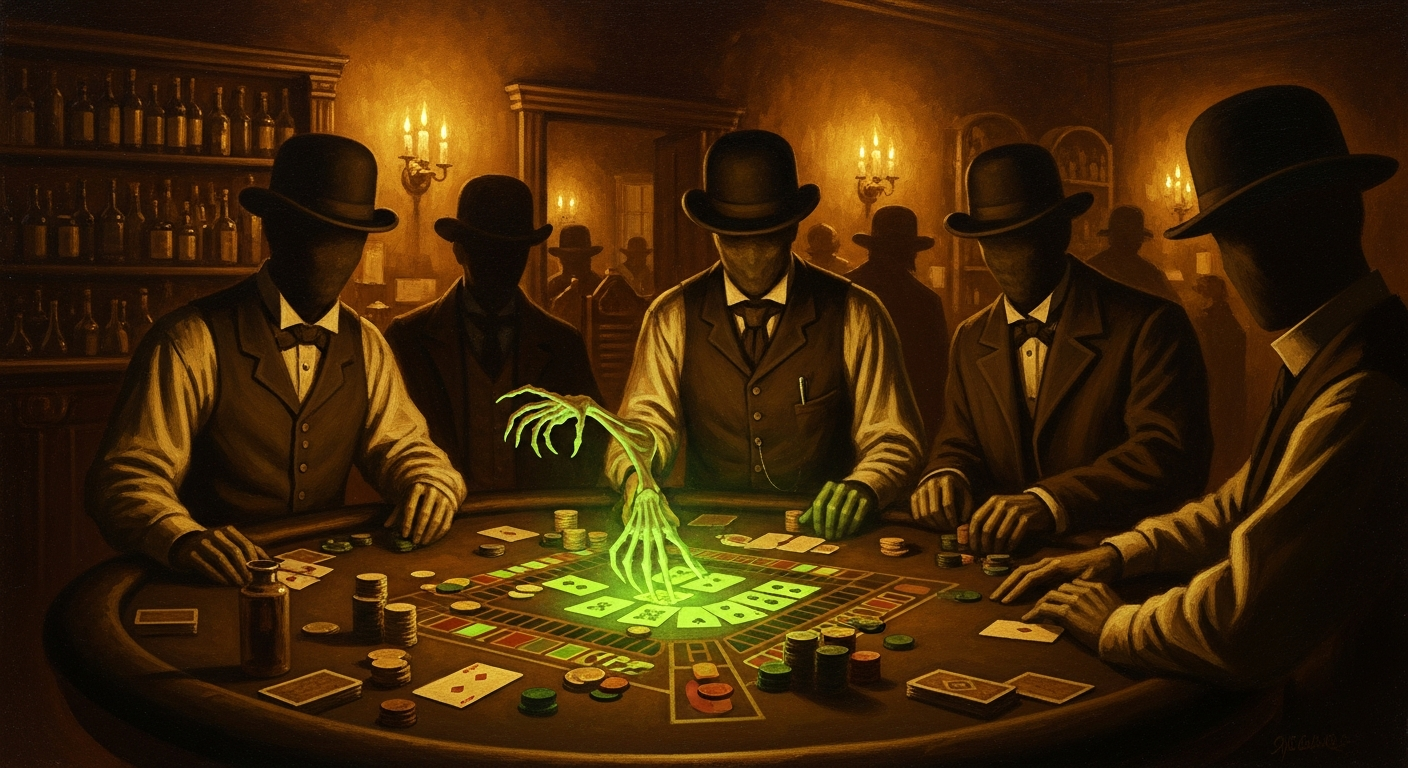
The Cursed Table — Three Dead Men and the Faro Bank of Virginia City
Virginia City, Nevada. 1861. A silver rush town so wild and so wealthy that miners paved the streets with low-grade ore because it wasn’t even worth hauling away.
Read More →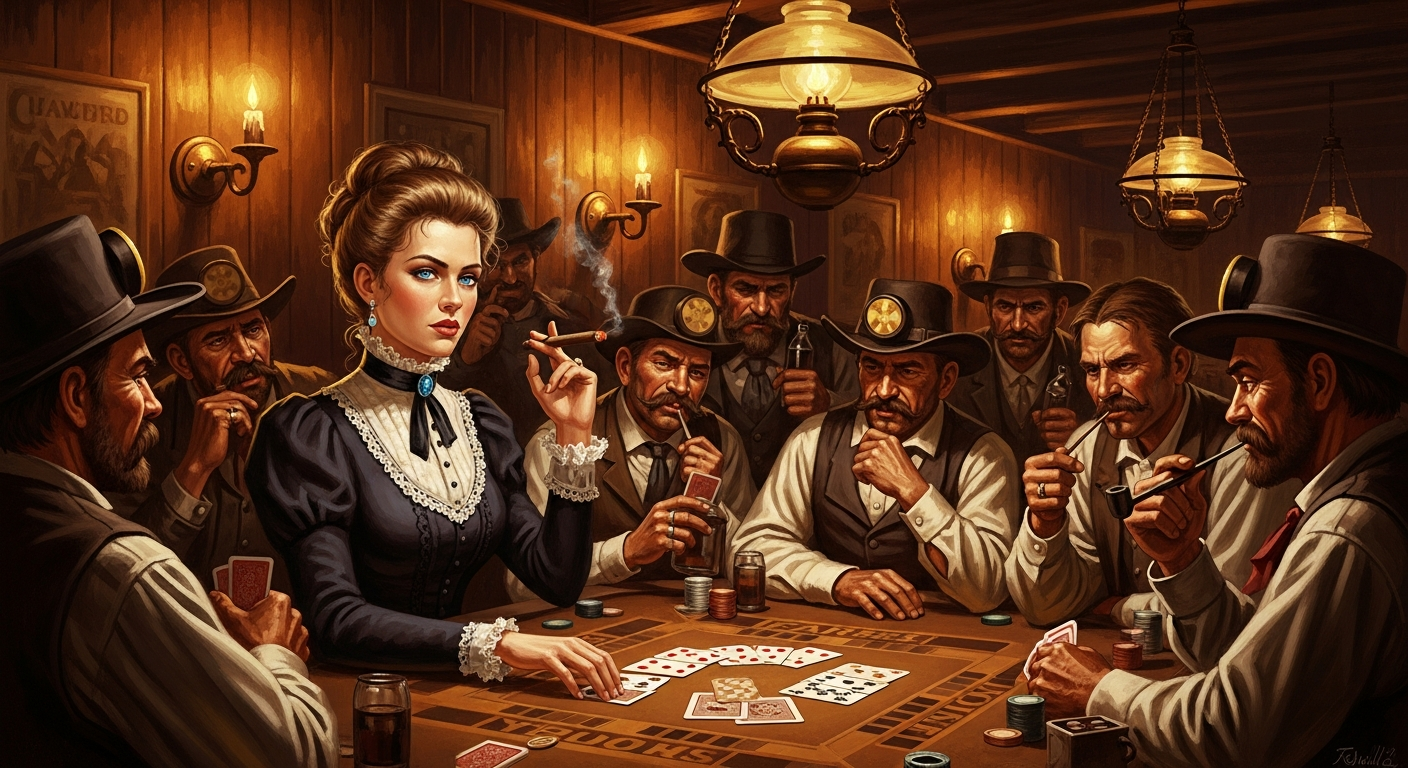
Poker Alice — The English Rose Who Dealt Faro Better Than Any Man Alive
She was born in Devonshire, England, in 1851, the daughter of Irish immigrants. Ivers moved with her family to Virginia at the age of 12. She received a proper education. She was refined. She was a lady.
Read More →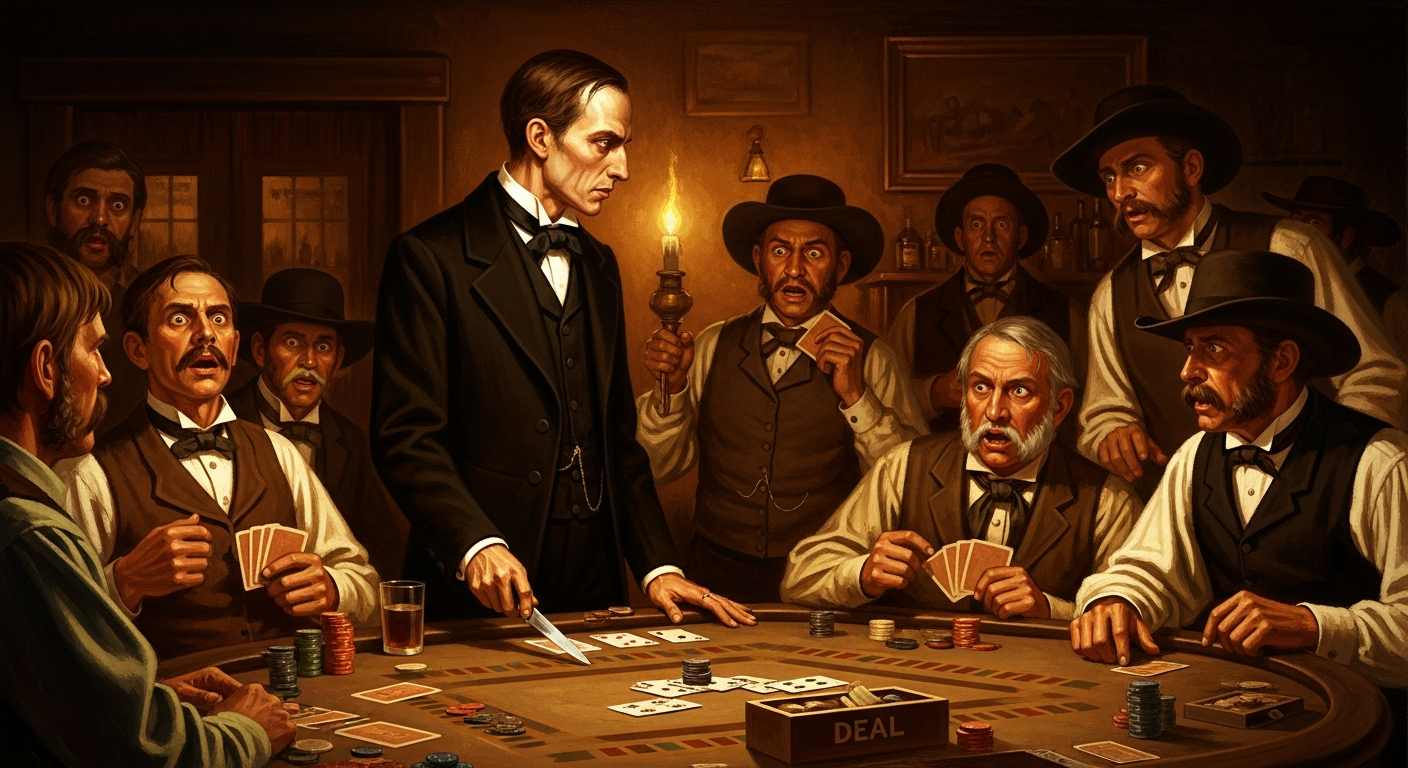
Doc Holliday and Ed Bailey — The Night a Faro Table Became a Crime Scene
Fort Griffin, Texas. 1875. Doc Holliday was twenty-four years old, already dying, and making his living running a faro bank.
Read More →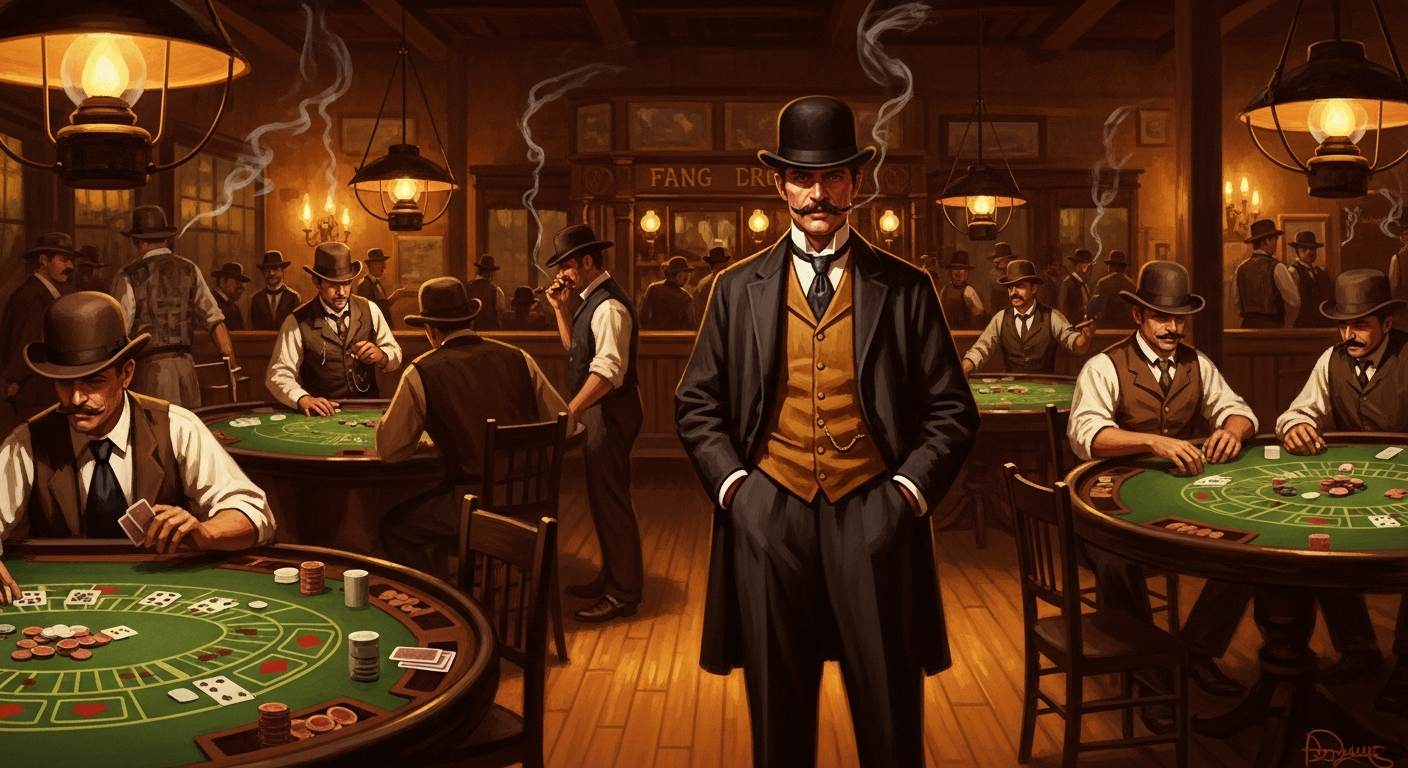
Soapy Smith — The Man Who Rigged Every Table and Died on a Wharf
Jefferson Randolph Smith II was born in 1860 in Coweta County, Georgia, to a respectable family of plantation owners and lawyers. The Civil War destroyed all of that. By the time he arrived in Texas as a teenager, there was nothing left to inherit and no particular reason to be honest.
Read More →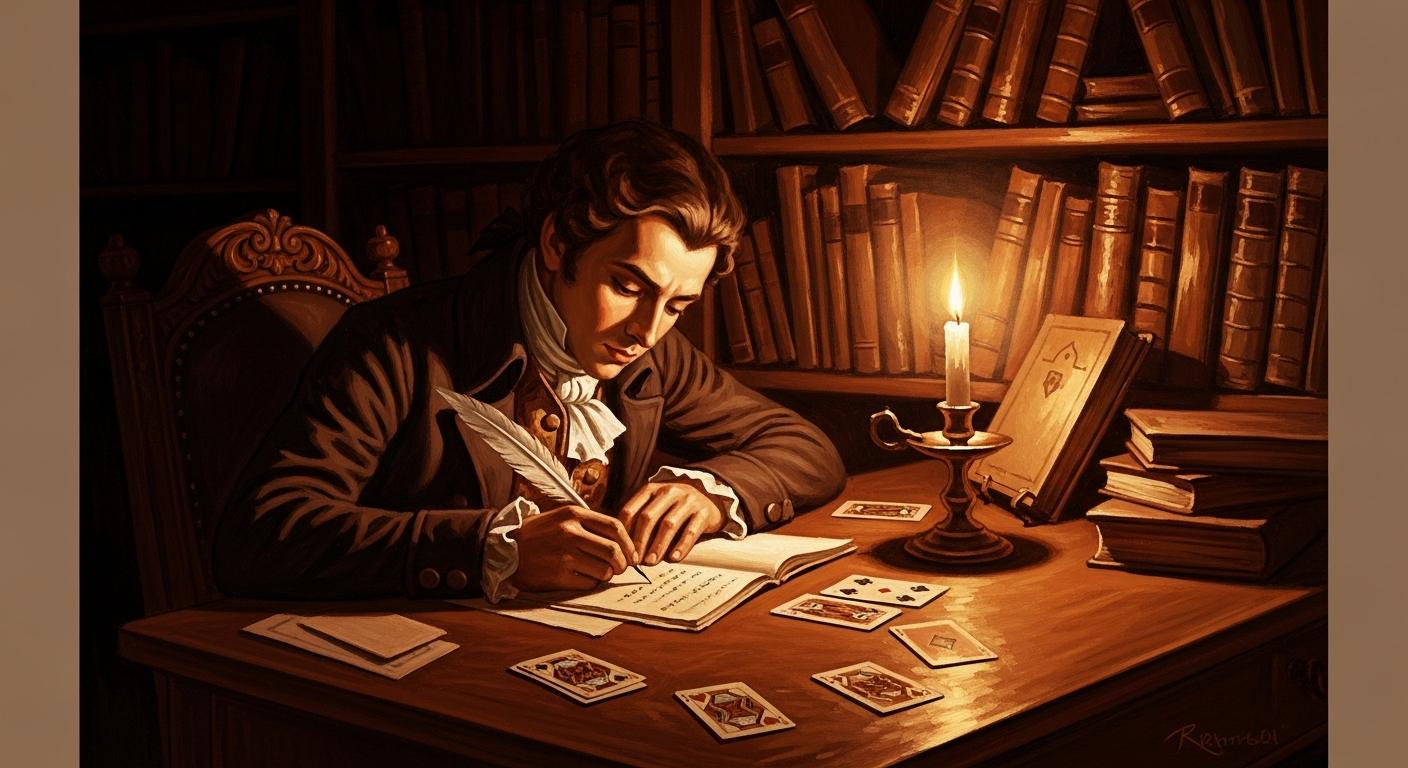
Pushkin’s Obsession — The Real Gambling Life Behind The Queen of Spades
In 1833, Alexander Pushkin — already the most celebrated writer in Russia, a man who had been exiled twice by the Czar and had survived duels that would have killed anyone less charmed — sat down and wrote a short story about faro.
Read More →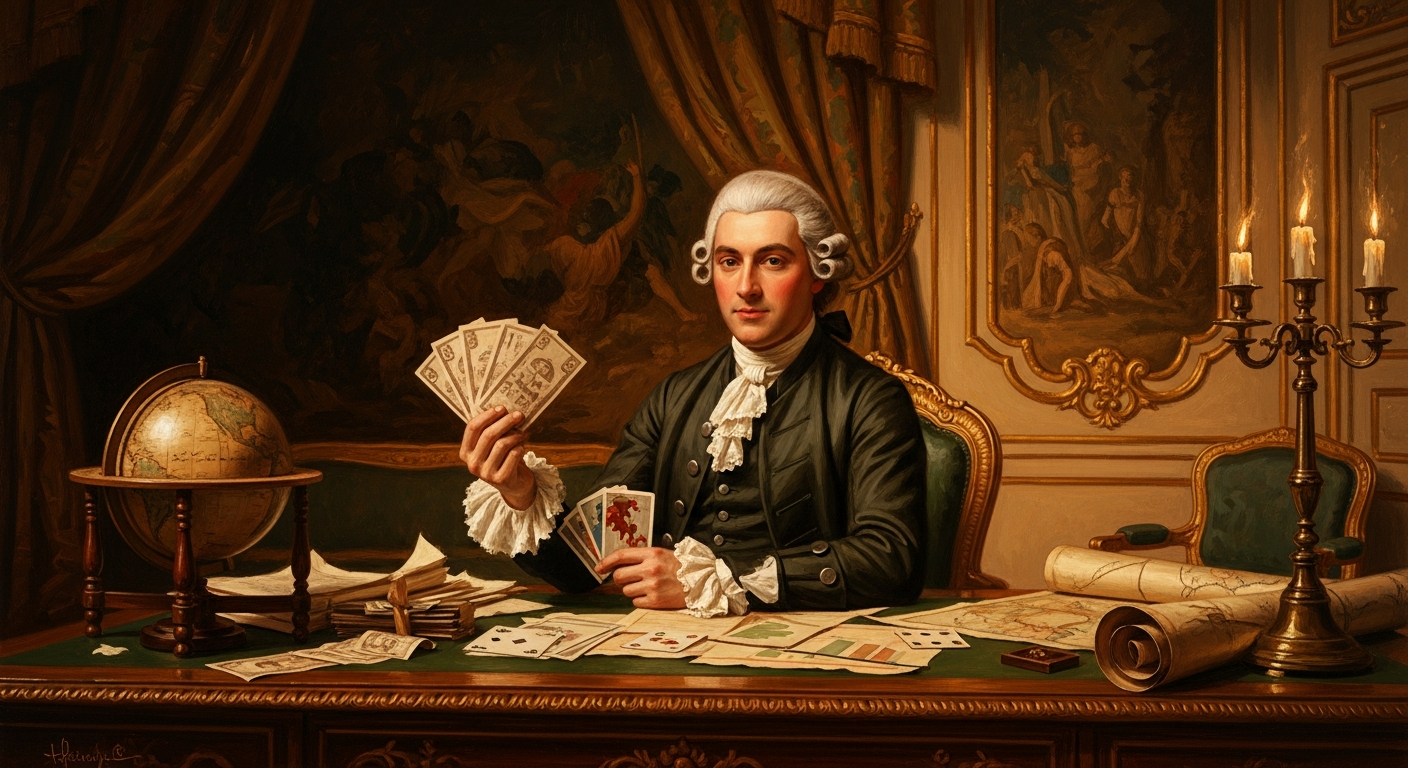
John Law — The Scottish Outlaw Who Accidentally Shaped the American Frontier
The man who brought faro to America was a murderer, a financial revolutionary, a con man, and one of the most brilliant minds of the 18th century — often simultaneously.
Read More →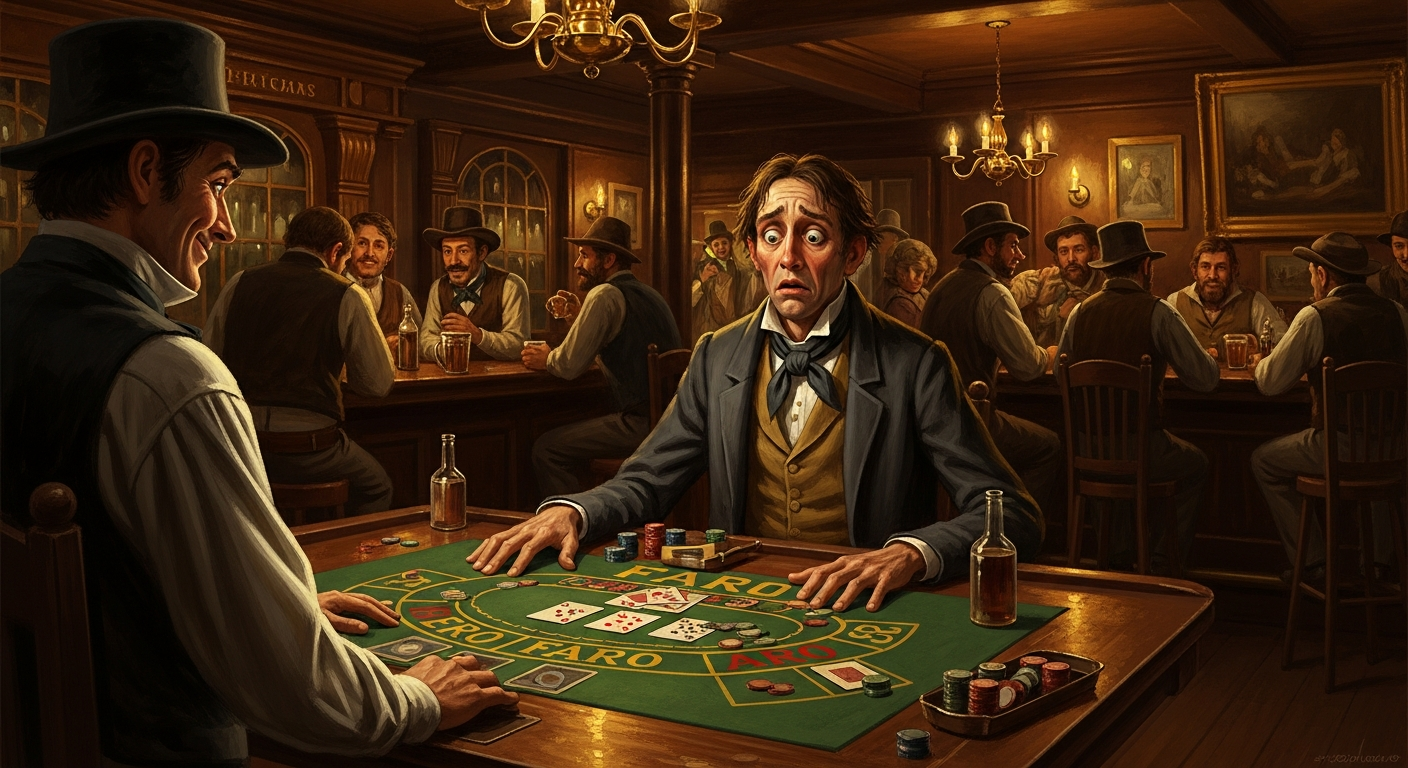
Canada Bill Jones and the Only Game in Town
William Jones — universally known as Canada Bill — was perhaps the most singular personality in the history of American gambling. He looked like no one’s idea of a dangerous gambler. He was described as rangy, awkward, childlike in his manner, with a squeaky voice and an expression of permanent bewilderment. He wore clothes that fit badly. He seemed to have wandered in from somewhere more innocent.
Read More →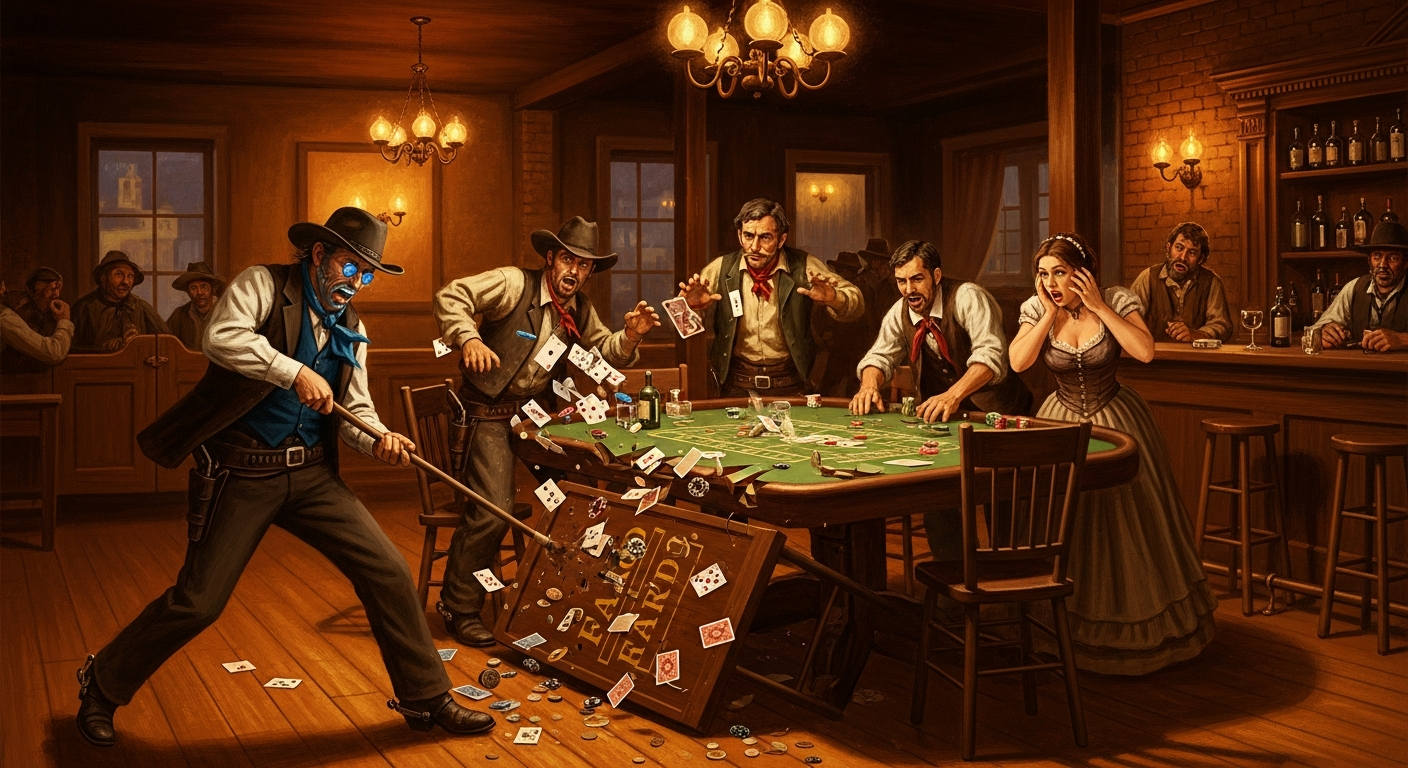
George Devol and the Walking Stick — A Faro Story from 1874
This story comes from George Devol himself, who recorded it in his 1892 memoir, Forty Years a Gambler on the Mississippi, with his characteristic mixture of showmanship and precision.
Read More →The Game Is Back
Faro was killed not by its failure but by its fairness. In a digital world — where every outcome is transparent and verifiable — the game that once consumed an empire is finally free.
♠ Buck the Tiger