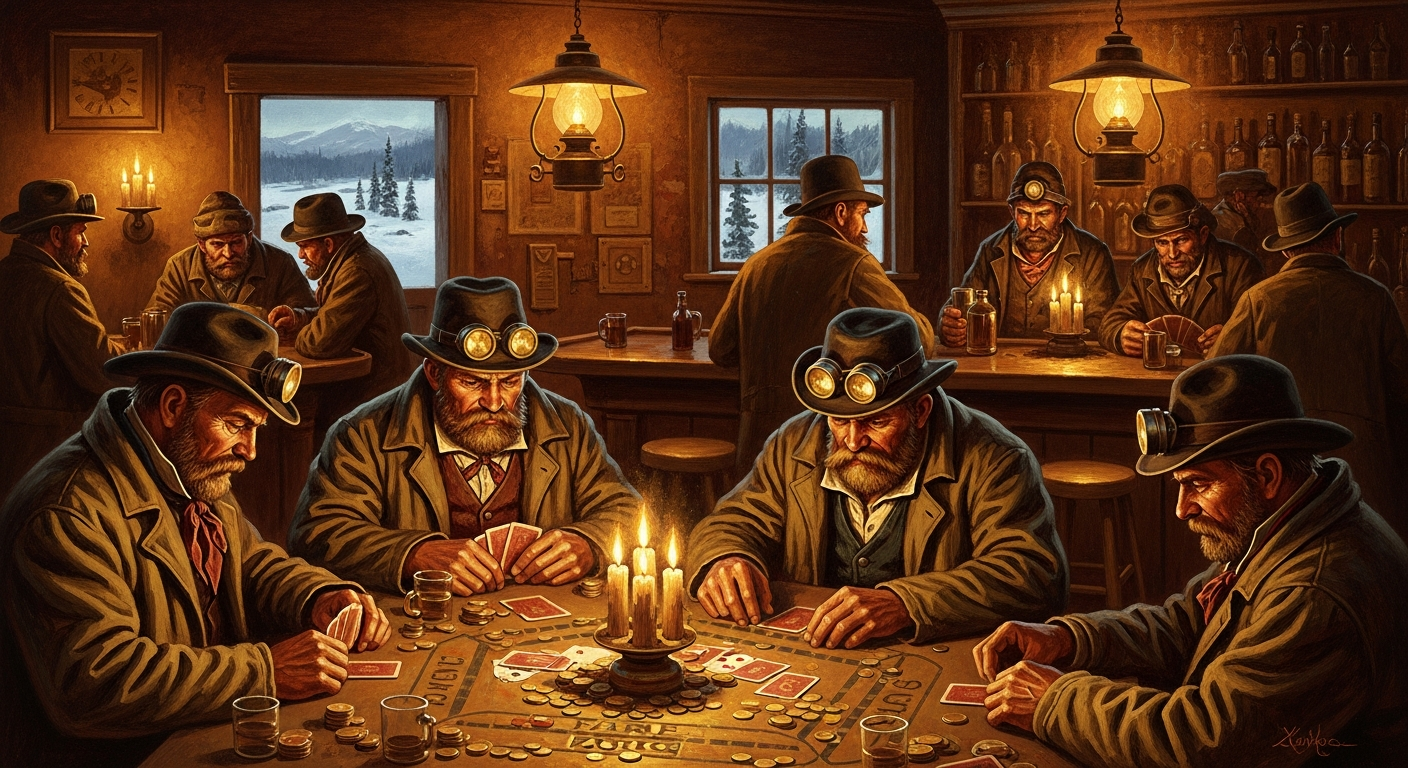
The gold discoveries in Canada’s Yukon Territory in the 1890s triggered one last great faro migration. Every gambler who had worked the western saloons knew that where miners went, easy money followed. The last great rush for a new mining district was on, both for the miners and those with the purpose of mining the miners. Some of the most colorful professional gamblers made it to the assortment of saloons, brothels and gambling halls newly developed.
The stories from the Klondike are among faro’s most dramatic. Harry Wollrich had $60,000 in his pocket ready to board a steamer home. Before leaving he flipped a half dollar on a faro layout and 24 hours later had lost all his money and the steamer ticket home. A man with $60,000 — a fortune in any era — gone because he couldn’t walk past a faro table.
In 1902, the Douglas Island News reported, “Pat Renwick has been bucking the tiger at Skagway the past week and pulled out winner to the extent of $3,200.” In 2023 dollars, Renwick won roughly $115,000. The news was plastered on the front page of the newspaper. Winning at faro was genuine news — celebrated in print because it was genuinely unusual.
Even Wyatt Earp made the trip north. Wyatt Earp also went to Alaska and opened the Dexter Saloon in Nome, advertised as “The Only Second-Class Saloon in Alaska.” Where Earp went, faro followed.
George Lewis “Tex” Rickard owned, prospered, and lost two gambling houses in the Klondike. He began promoting prizefights there and ended up being the promoter of the multimillion dollar fight in the 1920s featuring Jack Dempsey. The man who created modern boxing promotion — who built Madison Square Garden into a sporting cathedral — got his start running faro tables in the Yukon.
The Yukon’s connection to faro is permanent in another way: the Yukon town of Faro, Canada, is named after the game. A mining town founded in the 1960s carries the game’s name to this day.